SKRIPSI MBS
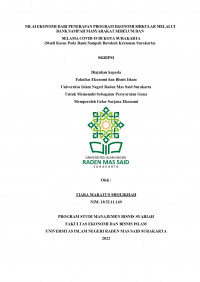
NILAI EKONOMI DARI PENERAPAN PROGRAM EKONOMI SIRKULAR MELALUI BANK SAMPAH MASYARAKAT SEBELUM DAN SELAMA COVID-19 DI KOTA SURAKARTA (Studi Kasus Pada Bank Sampah Barokah Kratonan Surakarta)
ABSTRACT The Covid-19 pandemic has brought most of the waste bank activities in Surakarta to al halt due to the Large-cale Social Restriction (PSBB). This study aimss to explain the differences in the economic value of the Barokah Waste Bank in Surakarta City before and during Covid-19. The indicator in analyzing the economic value of the waste bank is the amount of income of the members of the waste bank generated from recycling transactions. Primary data was collected through in-depth interviews with the Chairperson of the Kratonan RW and the Barokah Waste Bank Manager. The economic value of Waste Banks before the pandemic (2017-2019) fluctuated. This is evidenced by the different selling prices of the waste depending on the composition and treatment of waste before sale and the location where the waste is sold. The price of waste is low because the waste bank does not work directly with central collectors. In 2017, the value weighing was Rp1.491.857. In 2018 it was Rp286.000. Meanwhile, in 2019 the result of weighing waste was Rp582.638. Economic value during the pandemic, in 2020 Barokah Waste Bank obtained a weighing result of Rp374.620. Meanwhile, in 2021 there will be no transactions at all. Researcher chose the Mann Whitney Test to find out the difference in average economic values before and during Covid-19 based on the calculation of 4 types of waste (Cardboard, Duplex, PET,HVS). The calculation yields a sig value ess than 0,05, which is analyzed with IBM SPSS Software 23.0. The result showed that the pandemic had a significant impact on the economic value of waste banks. Keywords : Waste Bank, Economic Value, Pandemic Covid-19, The Circular Economic
Ketersediaan
Tidak ada salinan data
Informasi Detail
- Judul Seri
-
-
- No. Panggil
-
2X6.3 TIA n 23
- Penerbit
- SUKOHARJO : Manajemen Bisnis Syariah_UIN RM Said., 2023
- Deskripsi Fisik
-
21 cm, 135 halaman
- Bahasa
-
Indonesia
- ISBN/ISSN
-
-
- Klasifikasi
-
2X6.3
- Tipe Isi
-
-
- Tipe Media
-
-
- Tipe Pembawa
-
-
- Edisi
-
-
- Subjek
- Info Detail Spesifik
-
-
- Pernyataan Tanggungjawab
-
Tiara Maratus Sholikhah
Versi lain/terkait
Tidak tersedia versi lain
Lampiran Berkas
Komentar
Anda harus masuk sebelum memberikan komentar
 Karya Umum
  Filsafat
  Agama
Agama  Ilmu-ilmu Sosial
  Bahasa
  Ilmu-ilmu Murni
  Ilmu-ilmu Terapan
  Kesenian, Hiburan, dan Olahraga
  Kesusastraan
  Geografi dan Sejarah